
Customer Service - Agent Training
Gamified Scenario-based Learning
| Shine Berry Customer Service Training
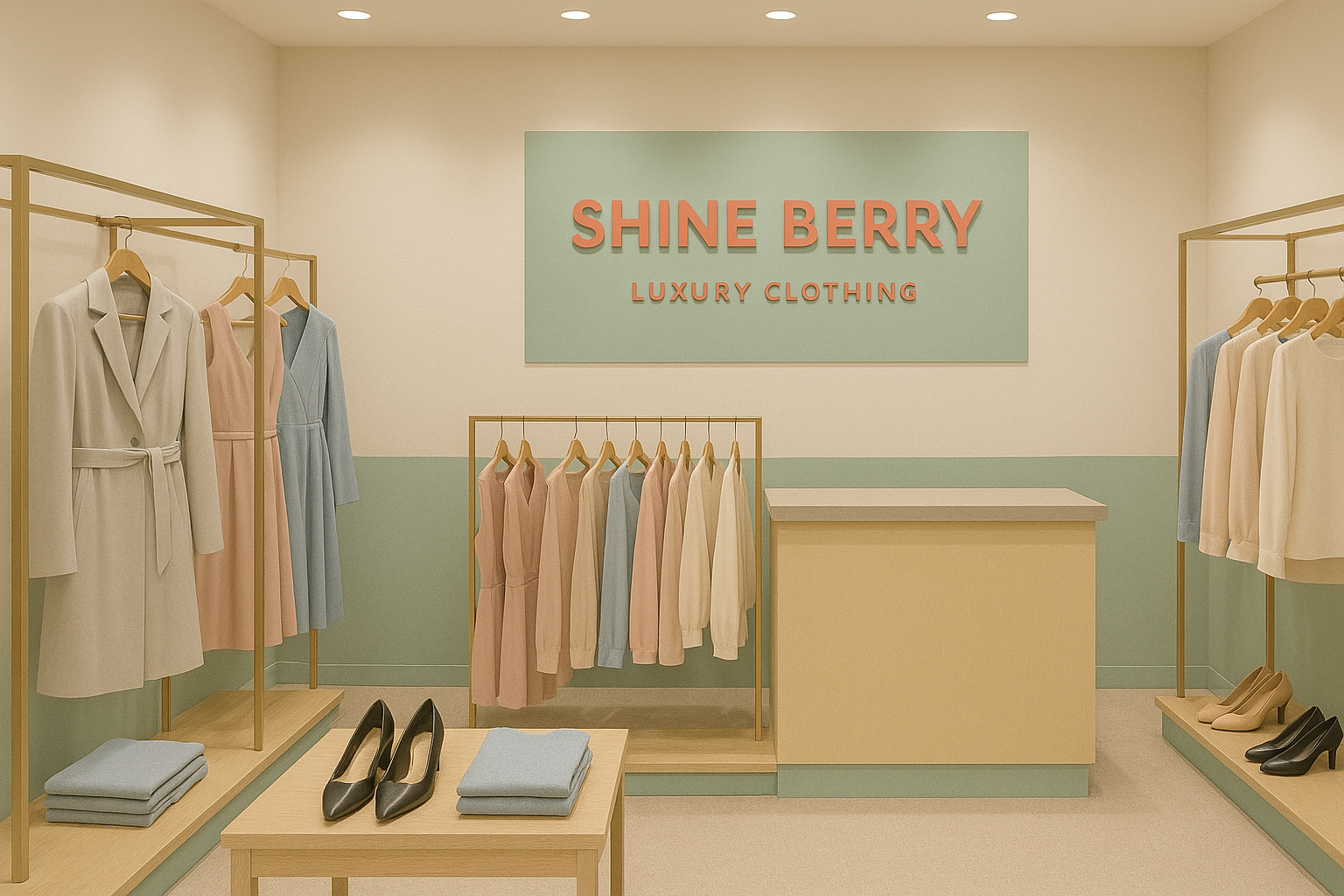
Case: Shine Berry is a luxury fashion brand that sells elevated essentials and formal wear. It also has an online store. Shine Berry wants to ensure that its customer service agents, who handle inbound queries, strike a balance between following company policies and ensuring customer satisfaction.
The objective is to create a short module that can take a customer service agent through a situation. Based on the solutions the agent provides, the module can assess whether the customer service agent is adhering to the policies while providing quality service.
Tools: Articulate Storyline 360 and other tools
| Building the Branching Framework
To meet the objective, I decided to focus on a specific category of the policy at a time. In this scenario, I focused on key policies around Retuns & Refund.
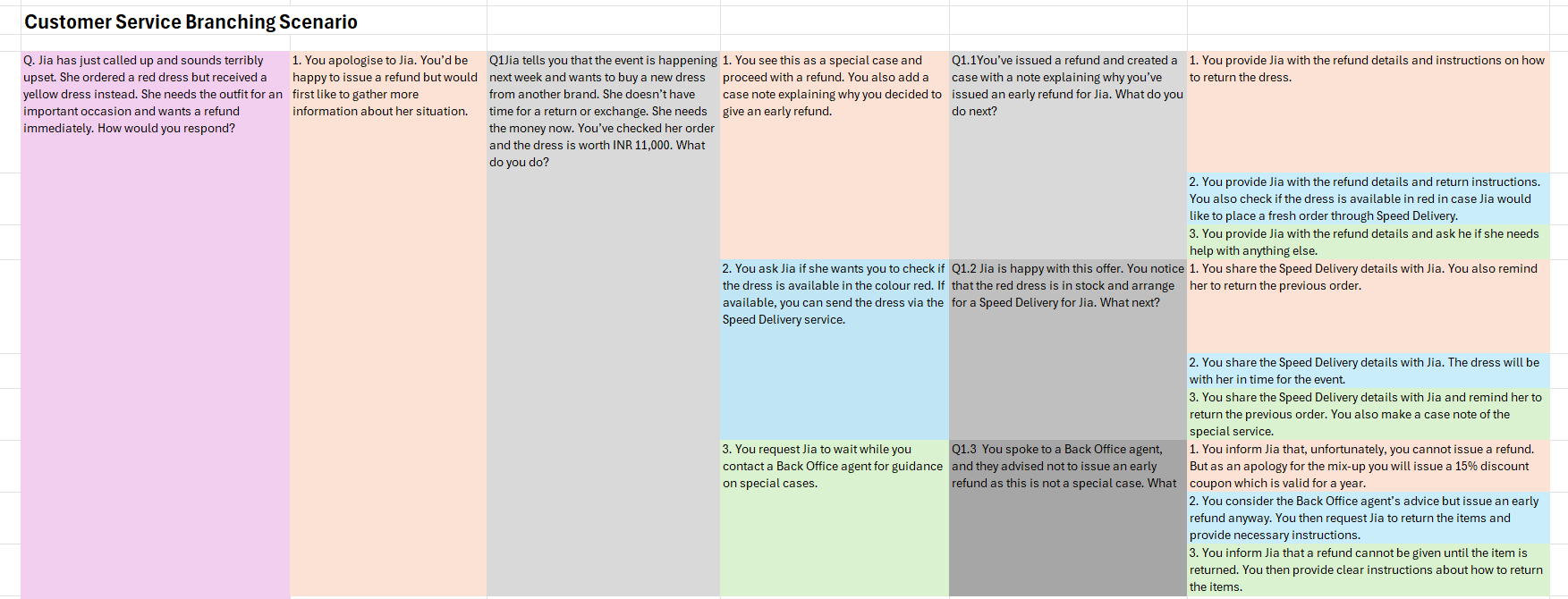
In this module, the agent is presented with a situation around returns and refunds, and can go through the policy and order details to make an informed decision about the best next step. While there is no correct answer, the agent scores points around compliance and customer satisfaction depending on their decisions. By the end of the module, the agent is given feedback on how they performed.
A snapshot of the branching structure is shown below. The answers are colour-coded based on the answer number (first, second or third).
| Gamification and Personalization
The solutions were designed carefully and each response was assigned a score based on two key parameters:
1. Customer satisfaction
2. Adherence to company policy
This approach aimed to answer the following questions:
a. Is an agent following the rules but not empathizing with the customer?
b. Is the agent being empathetic at the cost of compliance?
c. Is the agent ignoring both?
d. Is the agent striking a balance between compliance and customer satisfaction?
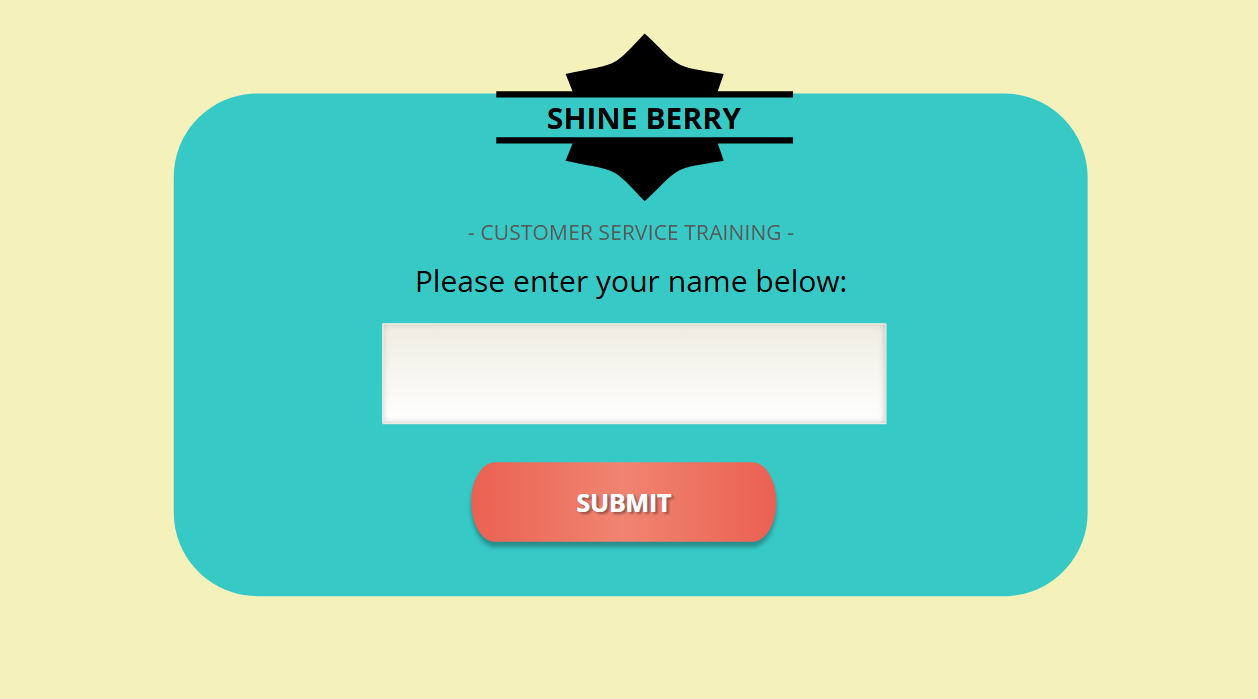
The module also had an element of personalization, where the agent could enter their name before proceeding with the module. The conversation would then appear as though it were between the agent and the customer.
| Prototyping
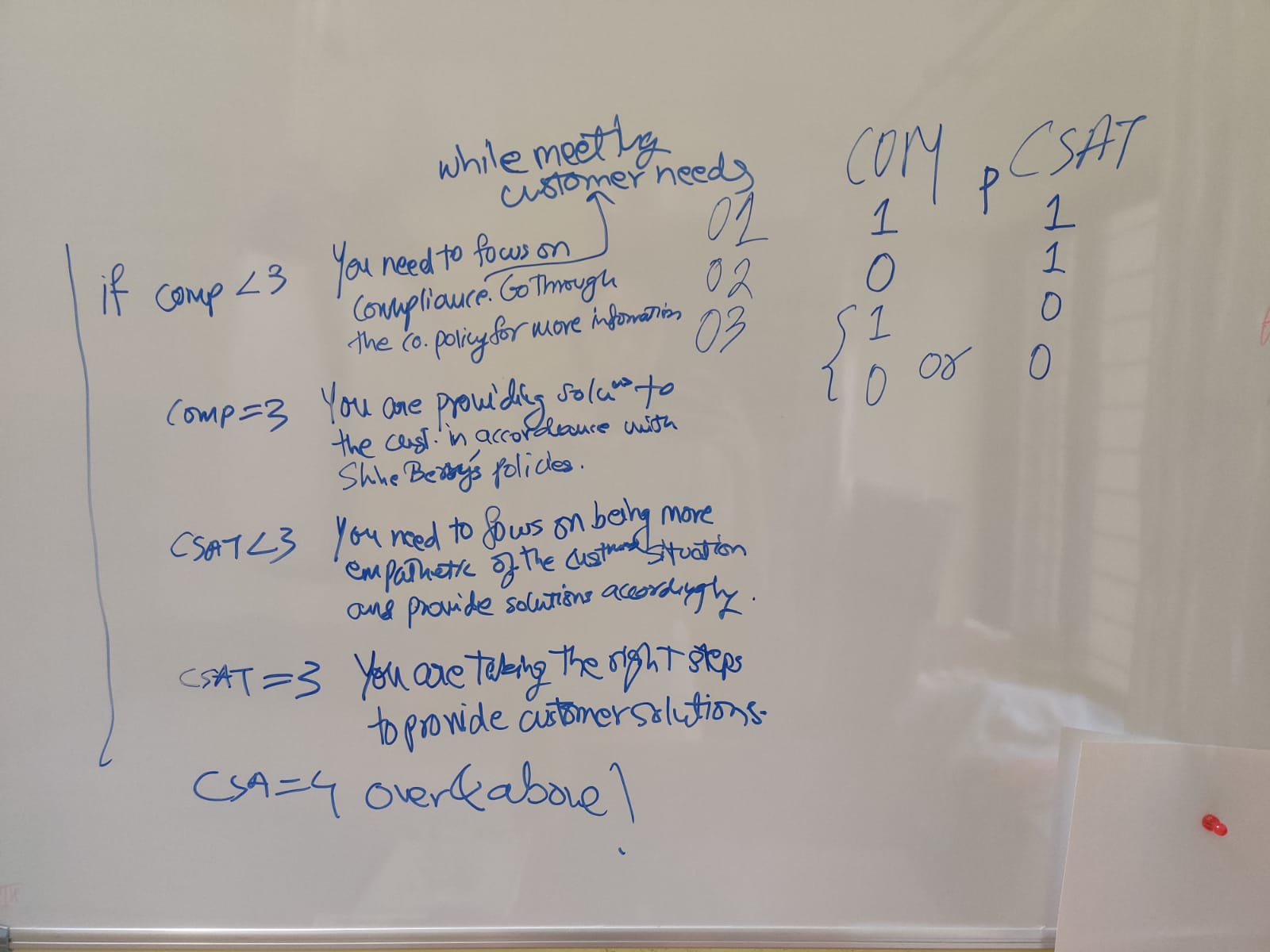
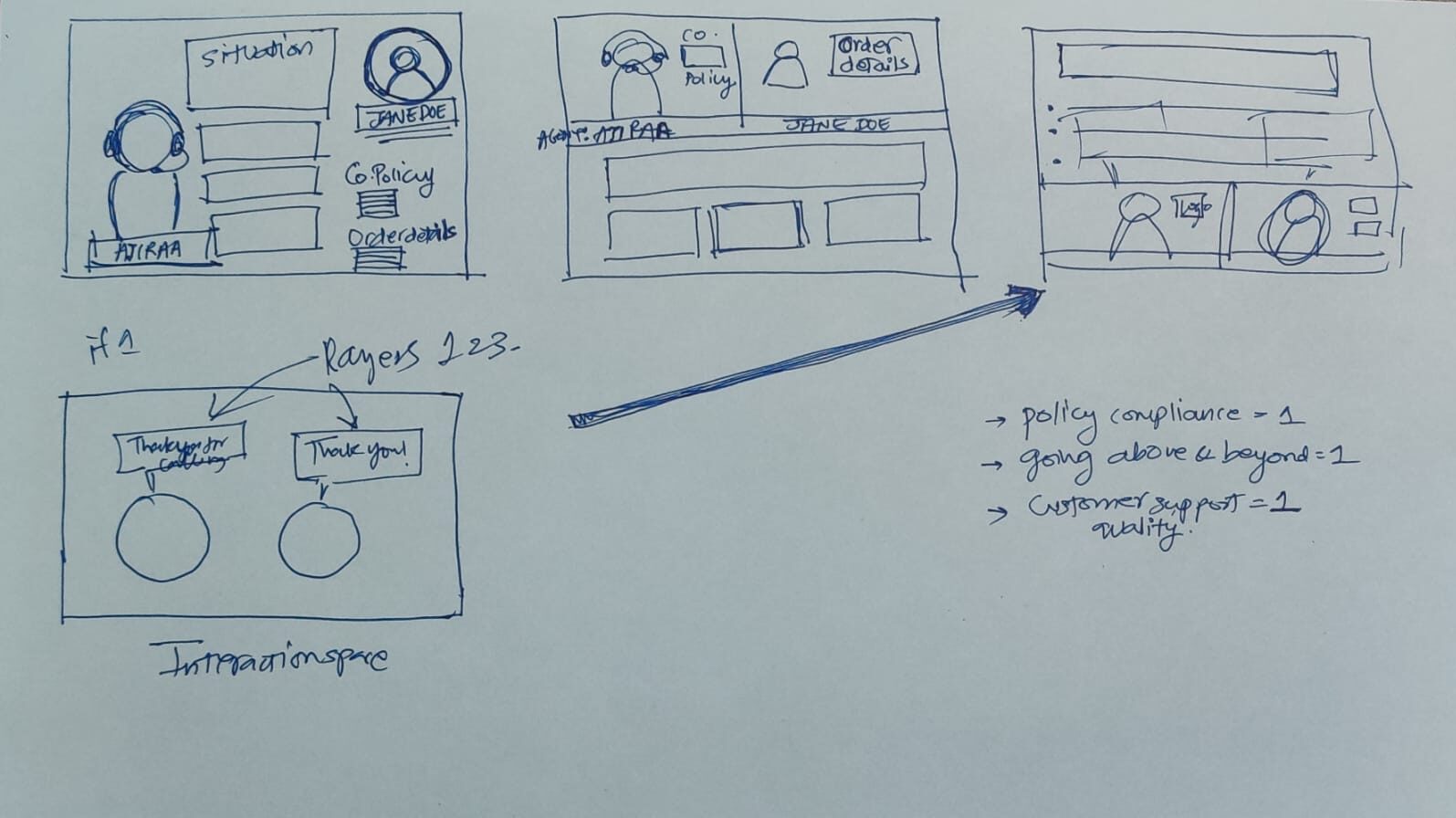
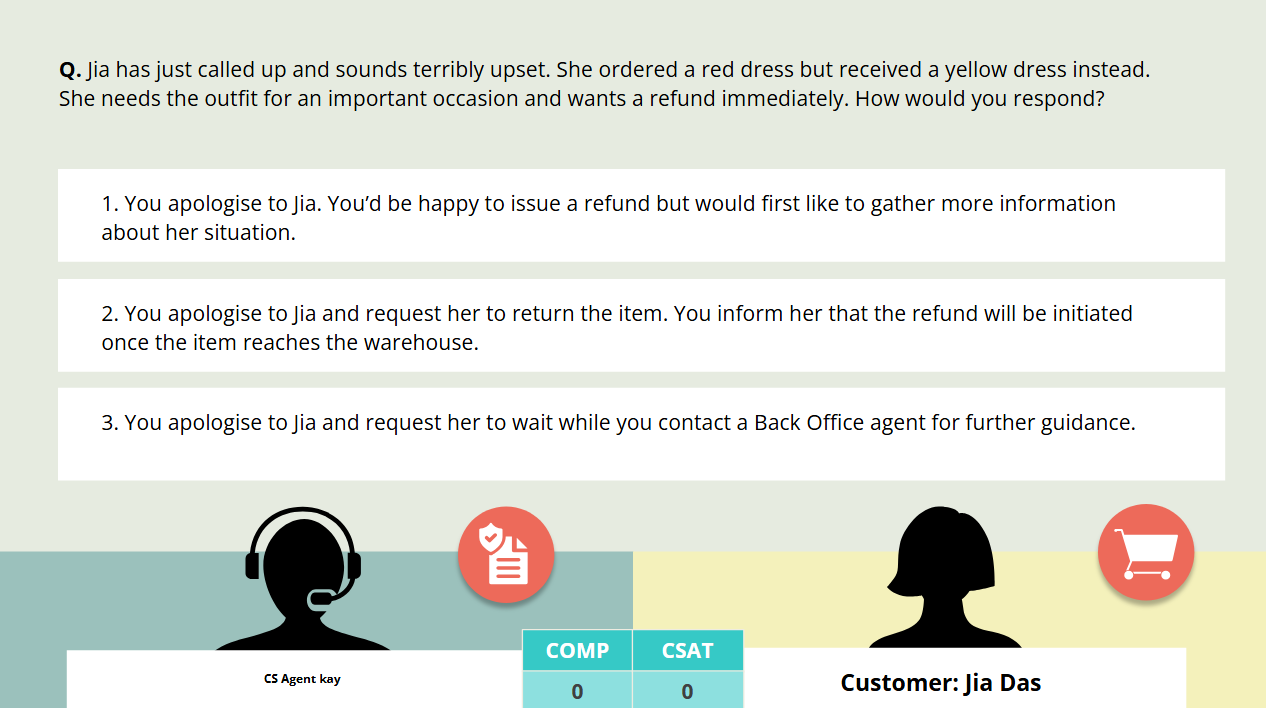
Once the framework was in place, it was time to sketch the layouts, plan the palette, and build the prototype. Below are a few snapshots from the process.
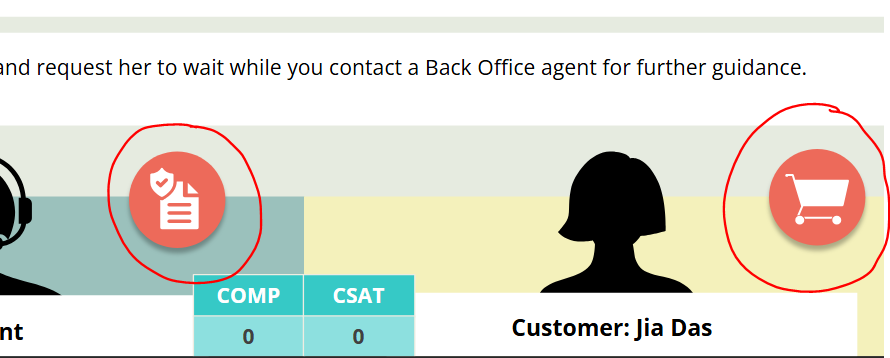
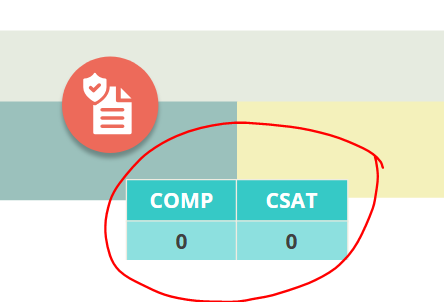
The wireframing began with hand-drawn sketches, leading to samples created on Articulate. I identified the elements that would be used by agents to access resources and the counter that would help them keep score. The snapshots are shared below.
| Developing: Building on Storyline 360
The module was built on Storyline and achieved the following:
1. It created a scenario that branched out based on the agent’s decision.
2. It added a touch of personalization.
3. It gamified the experience by assigning scores for each action.
4. It measured the key parameters: compliance and customer satisfaction.
5. It provided feedback on the agent’s performance.